
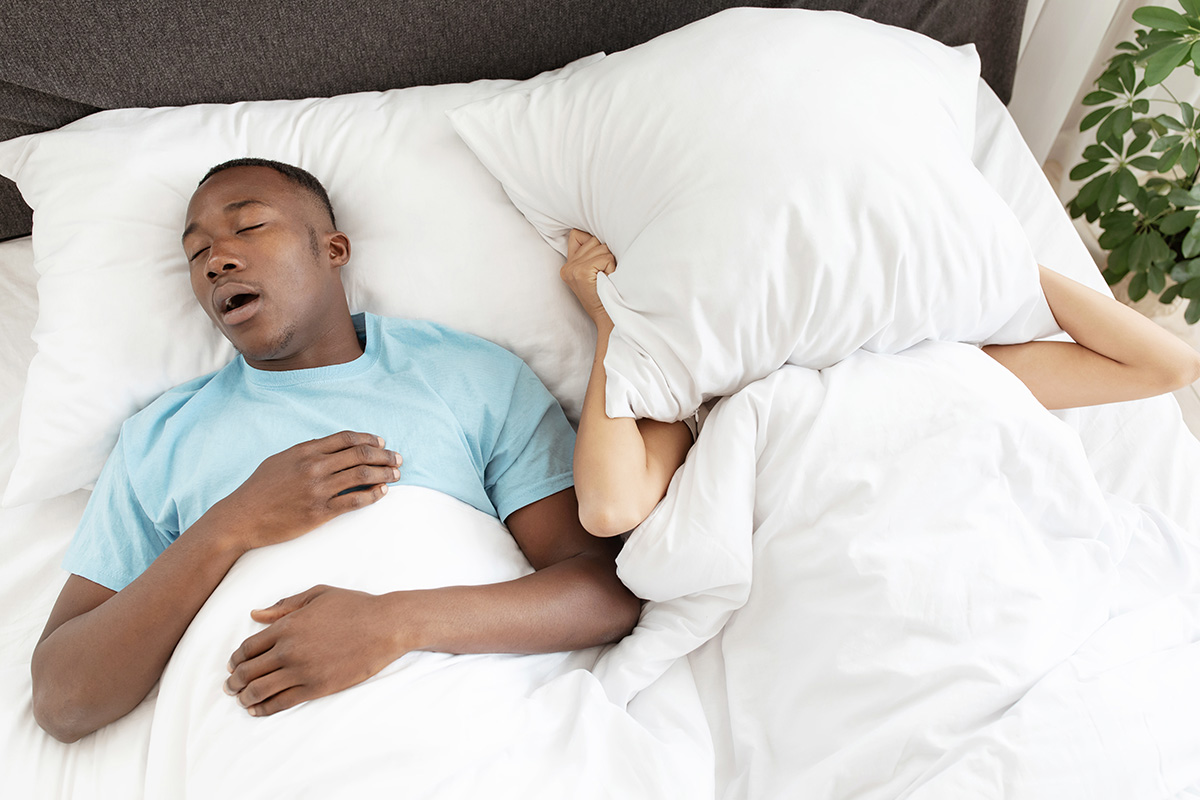
Snoring is one of the most common sleep concerns, but that does not mean you have to simply live with it. For some people, snoring happens occasionally, while others deal with loud or persistent snoring almost every night.
Understanding what causes snoring can help you identify changes that may reduce it and recognize when it could be a sign of an underlying sleep disorder. While lifestyle changes can help some people, frequent snoring may also be connected to obstructive sleep apnea. It can also affect your partner's sleep and leave both people feeling tired during the day.
What Causes Snoring?
Snoring happens when air cannot move freely through the nose and throat while you sleep. As you fall asleep, the muscles and tissues around your airway naturally relax. If the airway becomes narrowed, the moving air causes surrounding tissues to vibrate, creating the sound of snoring.
Several factors can affect how easily air moves through your airway, including sleep position, nasal congestion, alcohol use, anatomy, and sleep habits.
Common Causes of Snoring
Sleeping on Your Back
Your sleeping position can have a significant effect on snoring. When you sleep on your back, gravity can cause the tongue and soft tissues in the throat to move backward, narrowing the airway. For some people, switching to side sleeping can help keep the airway more open and reduce nighttime snoring.
Nasal Congestion
A blocked or congested nose can make it harder to breathe normally while sleeping. Allergies, colds, chronic congestion, or structural issues such as a deviated septum can restrict airflow and contribute to snoring.
Alcohol Before Bed
Alcohol can relax the muscles in the throat, making the airway more likely to narrow during sleep. Drinking close to bedtime may therefore make snoring worse, even if you do not normally snore heavily.
Lack of Sleep
Being overtired can contribute to increased muscle relaxation during sleep, which may make the tissues around the airway more likely to narrow. Maintaining a consistent sleep schedule and getting enough rest may help reduce this contributing factor.
Weight and Airway Anatomy
For some people, excess tissue around the neck and throat can contribute to airway narrowing. The natural structure of the mouth, jaw, tongue, soft palate, and nasal passages can also influence how easily air moves during sleep.
How Can You Prevent Snoring?
Try Sleeping on Your Side
If you tend to snore while sleeping on your back, changing to a side-sleeping position may help reduce airway narrowing.
Address Nasal Congestion
If allergies or congestion affect your breathing, addressing the underlying problem may help.
Limit Alcohol Before Bed
Reducing or avoiding alcohol close to bedtime may help prevent excessive relaxation of the throat muscles and reduce snoring for some people.
Maintain Healthy Sleep Habits
Aim for a consistent sleep schedule and enough sleep each night. Improving your overall sleep habits may help reduce factors that contribute to snoring. A regular bedtime can also make it easier to establish healthier sleep routines.
Maintain a Healthy Weight
For people whose snoring is affected by excess tissue around the airway, maintaining a healthy weight may help reduce airway narrowing.
When Is Snoring a Sign of Sleep Apnea?
Not everyone who snores has sleep apnea. However, persistent or loud snoring can sometimes be one of the most noticeable signs of obstructive sleep apnea, particularly when it occurs alongside other symptoms.
Pay attention if your snoring is accompanied by:
- Pauses in breathing during sleep
- Gasping, choking, or snorting during the night
- Excessive daytime sleepiness
- Morning headaches
- Waking with a dry or sore throat
- Difficulty concentrating
- Restless or disrupted sleep
Obstructive sleep apnea occurs when the airway repeatedly becomes blocked during sleep. If you experience several of these symptoms, it is worth discussing them with a healthcare professional rather than assuming your snoring is harmless.
Can Snoring Be Treated?
The best approach to treating snoring depends on what is causing it. For some people, lifestyle changes and adjustments to their sleeping habits may be enough to reduce symptoms.
When snoring is related to obstructive sleep apnea, addressing the underlying breathing problem becomes particularly important. Depending on the diagnosis, treatment options may include CPAP therapy, oral appliance therapy, positional approaches, lifestyle changes, and other treatments.
When Should You Get a Sleep Apnea Test?
If you snore regularly and are concerned about your breathing during sleep, a sleep apnea test can help provide answers. A sleep study can monitor breathing and other factors while you sleep to help determine whether sleep apnea is present. The results can help a qualified professional decide whether further evaluation or treatment is appropriate.
Consider speaking with a healthcare professional if your snoring is persistent, getting worse, disrupting your partner's sleep, or accompanied by breathing pauses, gasping, or significant daytime fatigue.
If you are concerned that your snoring could be related to sleep apnea, consider reaching out to a local sleep clinic to discuss your symptoms and whether a sleep apnea test may be appropriate. Getting evaluated can help determine whether further testing or treatment is needed.
Better Sleep Starts With Understanding the Cause
Snoring can have many different causes, from sleeping position and nasal congestion to alcohol use, sleep habits, anatomy, and airway-related conditions. While simple changes can help some people, persistent snoring should not automatically be dismissed as harmless.
Understanding why you snore is the first step toward finding an effective solution. If your snoring is accompanied by other signs of disrupted breathing or poor-quality sleep, seeking professional guidance can help determine whether sleep apnea may be involved and what steps to take next.